
Napa County’s civil grand jury spent its term trying to find out why the tap water in St. Helena keeps running brown, and on June 24 it published an answer. The water leaves the treatment plant clean. It picks up decades of silt, debris and sediment on its way through nearly 46 miles of city mains. Nobody has assessed how bad the buildup is, and the report found no plan in place to get it out.
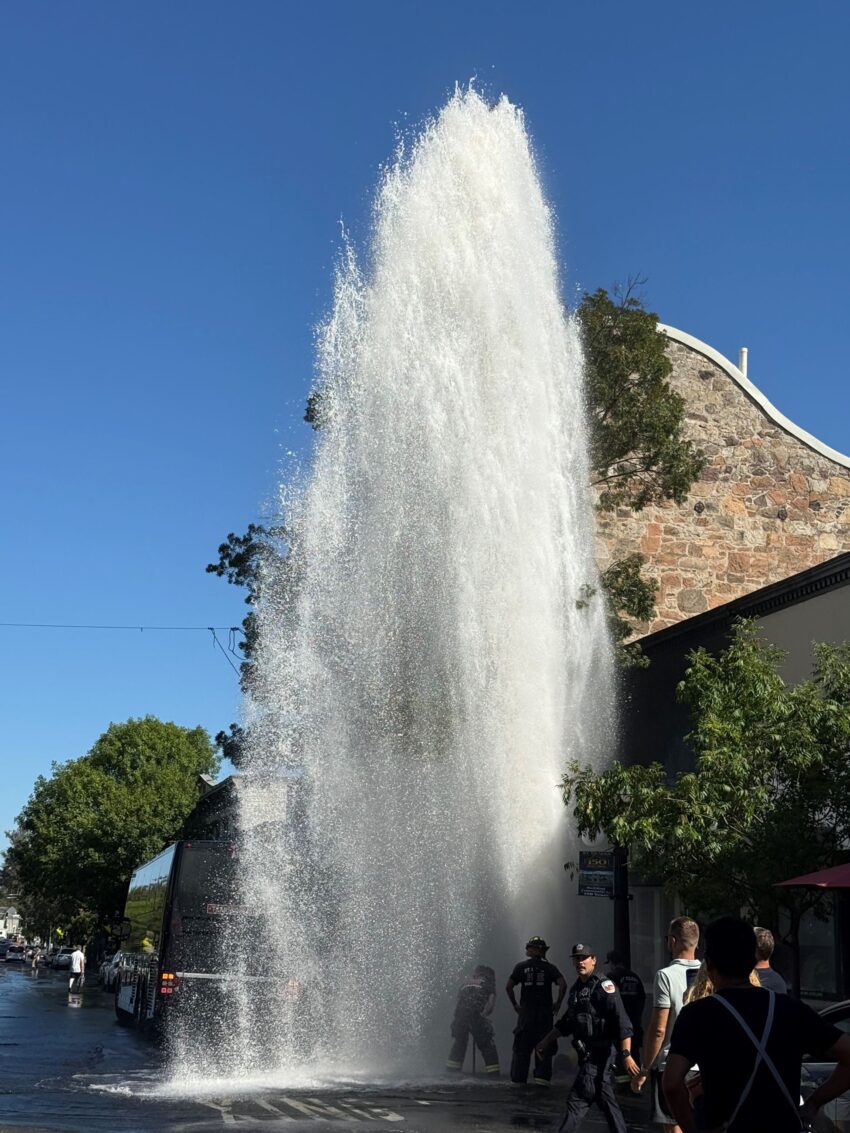
Twenty-four days later, a bus struck a fire hydrant on Main Street and stirred it up.
The collision happened at about 4:46 p.m. Saturday, July 18. The broken hydrant released an estimated 4,500 gallons a minute, and the city’s water system surged to meet the sudden draw. Firefighters were on scene four minutes later and capped the leak at 5:10 p.m. The mechanical problem lasted 24 minutes. The water problem ran three more days.
By 5 p.m. Monday the city had logged more than 80 resident reports of discolored water through its Grapevine complaint app, and it had pushed more than 400,000 gallons through the distribution system trying to flush the sediment back out. It told residents not to drink the discolored water, not to do laundry in it and to run a cold tap for several minutes to clear their service lines. As for when the water would run clear again, the city said Monday it couldn’t say when all areas would return to normal.
That’s close to what the grand jury had written a month earlier. Its report, titled “Lapsed Leadership: St. Helena’s Problematic Pipes and Murky Waters,” found that no formal assessment has been done to determine the scope and severity of the distribution system’s problems. Without one, the report said, “the repair costs and the timeline for repairs remain unknown.”
The answer came Tuesday. Fewer than six customers still had discolored water that morning, the city said, and crews flushed those locations, and every customer they reached has since reported clear water. “It appears that water quality has returned to normal throughout the City,” the city said, three days after the collision. City staff found no other damage to city facilities or water infrastructure.
The bus isn’t where this started. On July 9, nine days before the collision, the city posted its own notice that customers might see discolored water. The cause it gave then was its own operations: it was increasing production to meet summer demand, and the faster flow was stirring up “naturally occurring mineral sediments” in the mains. The advice was the same advice — run a cold tap, hold off on the white laundry, report it on Grapevine. The hydrant just did it harder.
The grand jury’s core complaint is that St. Helena has been charging for this repair since 2011 without making it. Water rates rose approximately 183% between 2011 and 2025, the report found. The 2011, 2016 and 2023 rate studies each cited the same core justifications: declining infrastructure, deferred maintenance, depleted reserves. In several cases they cited the same specific projects. Some were never funded. Some were never built. The jury concluded that the water utility “remains in a similar state of physical decline and financial distress today as it was in 2011.”
Nothing in the city’s current five-year capital plan is aimed at those pipes. The grand jury reviewed more than $51 million in projects identified as water priorities for fiscal years 2026 through 2030 and found that none of them are dedicated to addressing the aged distribution system. Nearly 39% of that money has no identified funding source.
City staff and consultants don’t dispute the diagnosis. The grand jury wrote that they believe the sediment in the mains is the dominant source of the taste, odor and color complaints, and that their reasoning “seems reasonable to the Civil Grand Jury.” What the report faults is what comes after the diagnosis. Beyond proposed testing, it found, staff and consultants “have no clear plan on how to attack the debris and sediment,” with options ranging from cleaning the mains out to replacing them altogether.
The city says that has changed. In its June 30 response, it said it began “a very successful high-velocity water main flushing pilot program” in June and is weighing whether to expand it. It also said it’s preparing a comprehensive condition assessment of the distribution system — the same assessment the grand jury asked for, with a Sept. 30 deadline attached.
Interim City Manager Jim McCann, appointed in April, said the findings raise “important issues that deserve thoughtful consideration” and that the city welcomes oversight, but that residents should also understand the work already done. He pointed to a new $18.8 million membrane bioreactor wastewater plant, granular activated carbon filtration at the water treatment plant, an upgraded system for monitoring and controlling the water network, nearly 3,000 smart water meters and several replaced pipeline segments. Bell Canyon Intake Tower replacement and further water main rehabilitation are in design.
Most of that list sits upstream of the problem. The grand jury credited the treatment plant work directly, finding that after recent upgrades the water leaves the plant “clear, clean, and healthy.” It then located the failure in the pipes between the plant and the tap. The city agrees with that distinction, arguing it shows where the remaining work is.
The city’s water quality expert, Issam Najm, told residents in the July 19 notice that discolored water comes from iron, manganese or both, and that the health risk is “extremely low.” He recommended against drinking or cooking with it anyway. California has proposed a health-based response level of 200 parts per billion for manganese, he said, and the city already treats its sources to well below that. Because a lab takes several days to report back on a sample, he said, the advisory stands in the meantime: avoid the discolored water.
The city said Monday it was weighing an insurance claim or other legal action against the bus company, and by Tuesday it was working with the city attorney on a claim for damages against whoever is responsible. None of the city’s notices name the bus company. It says it will decide later whether customers get credits.
Under state law the city council must respond in writing to every finding and recommendation within 90 days, which puts its answer due around Sept. 22. The grand jury asked for the distribution system assessment by Sept. 30 and a full repair plan — projects, costs, funding sources and a schedule — by Dec. 31. It also recommended charging outside-city and high-elevation customers for what it costs to serve them, and governance training for council members and senior staff.
This isn’t the first time a grand jury has looked. The 2018-19 Napa County Civil Grand Jury investigated St. Helena’s water as well.
Voters will see a separate city money question in November. On July 7 the council voted unanimously to place Measure S, a half-cent general sales tax expected to raise about $2 million a year, on the Nov. 3 ballot. It would pay for roads, sidewalks, deferred maintenance at city facilities, wildfire preparedness and general city services. It would not pay for the water system, which ratepayers fund through a separate enterprise account.
St. Helena has about 5,257 residents. It buys 47% of its drinking water from the City of Napa and draws the rest from Bell Canyon Reservoir and the Stonebridge wells. The water is fine when it leaves.