
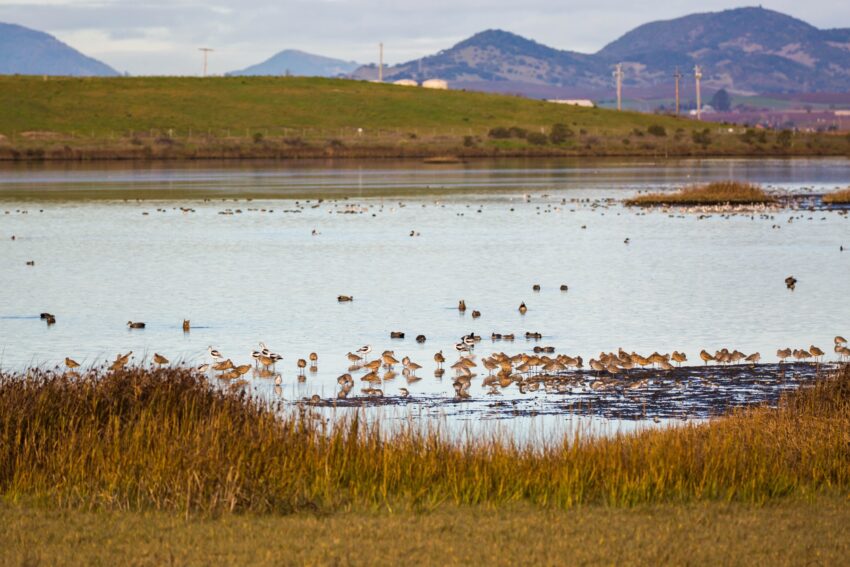
PETALUMA, CA., 11/4/26 — The state agency that oversees San Francisco Bay has issued an emergency permit for a ranch on the Petaluma River marsh to raise 1,400 feet of its levee, and the work is exempt from the state’s environmental review law.
The San Francisco Bay Conservation and Development Commission, known as BCDC, filed the exemption with the state on Oct. 28. Its notice says the emergency permit was issued “to authorize emergency levee maintenance to prevent flooding of Highway 37.”
The land is Carneros River Ranch, at 3900 Highway 37, beside Port Sonoma near the mouth of the Petaluma River. The permit holder is BBRRBR LLC. The notice names Carlo Berg as the company’s manager and lists a bergholdings.com email address for him. Berg Holdings is the Sausalito firm that owned the 528-acre ranch in 2011 and 2012, when its plans for the land drew news coverage.
The notice calls the job the “temporary continuation and completion of levee maintenance by reinforcing and raising 1,400 linear feet of the existing levee due to anticipated 2026 very strong El Nino conditions.” It doesn’t say how high the levee will go, what the work costs or when it began.
Exempt under the governor’s El Niño order
The exemption rests on Gov. Gavin Newsom’s Sept. 21 emergency proclamation. It directed state environmental and natural resources agencies “to prioritize work to help local agencies prepare for anticipated impacts from the El Niño event,” including efforts “to expedite levee and other flood management infrastructure repairs.” It told them to issue permits as quickly as possible, including “by identifying and invoking existing emergency authorities or other pathways for streamlined review.”
The commission’s notice quotes the first of those lines. It cites the emergency-project exemption in the California Environmental Quality Act, and adds that a second exemption, for work under a declared state of emergency, also applies.
The commission’s El Niño page tells shoreline property owners that repairing or strengthening a levee takes an emergency permit, and that it can issue one within 24 to 48 hours of a complete application. That work “can harm Bay wildlife and habitat,” the page says, “so BCDC may add conditions to protect them and to track the work.”
A permit may expire once the emergency is over, the commission says, and the holder may then have to apply for a regular permit to keep the work, which can bring required changes.
Highway 37’s flood risk
Highway 37 links Marin, Sonoma, Napa and Solano counties, and about 40,000 cars use it every day, according to a new report from the UC Davis Road Ecology Center. Major flooding or levee failures along the road could close it for months, the report found.
Its author, Fraser Shilling, said a blowout of a state-owned levee along the Petaluma River west of Lakeville Highway could close Highway 37 and leave a 6-square-mile farming area between Lakeville Highway and the Lakeville marina up to 3 feet underwater.
The commission says El Niño, a storm and a king tide — one of the year’s highest tides — arriving together could push Bay Area water levels 3 to 6 feet above normal.
In 2011 and 2012, the ranch’s fields sat about a foot below sea level behind a 10-foot levee on the east side of the Petaluma River, according to the county’s 2011 environmental filing and The Press Democrat.
A 2011 plan to raise the ranch’s fields
In July 2011, the Sonoma County Board of Zoning Adjustments approved Berg Holdings’ use permit to lift the ranch’s fields to about 7 feet above sea level with up to 18.5 million cubic yards of wet dredged soil, brought in over about 20 years.
The Sierra Club’s Sonoma Group appealed and asked for a full environmental impact report. In January 2012, the day before the Board of Supervisors was to hear the appeal, the company agreed to do one. The Sonoma Land Trust held an easement requiring the ranch to stay in farming, The Press Democrat reported then.
The state’s environmental review database lists four filings for the fill project. The last is the county’s notice that it was starting the report, received Oct. 25, 2012.