
The people who grew, made and sold Signorello Estate’s wine lost their jobs this month. On Friday, Nov. 6, the family’s Silverado Trail winery went to its lender at a foreclosure auction outside the Napa County Courthouse.
Owner Ray Signorello Jr. told the San Francisco Chronicle he laid off his entire staff that day. In August, Signorello Estate and its related companies had eight full-time workers: a winemaker, a cellar master, vineyard workers and an estate ambassador who handled tasting-room sales. That count comes from a sworn declaration he filed in federal bankruptcy court.
American AgCredit, a borrower-owned cooperative that lends to farm businesses, was the only bidder, the Chronicle reported. It bid the debt it was owed instead of cash. Sale results posted by the foreclosure trustee put the price at $22,273,334.47, the Napa Valley Register reported.
A fire, then a rebuild that cost twice the budget
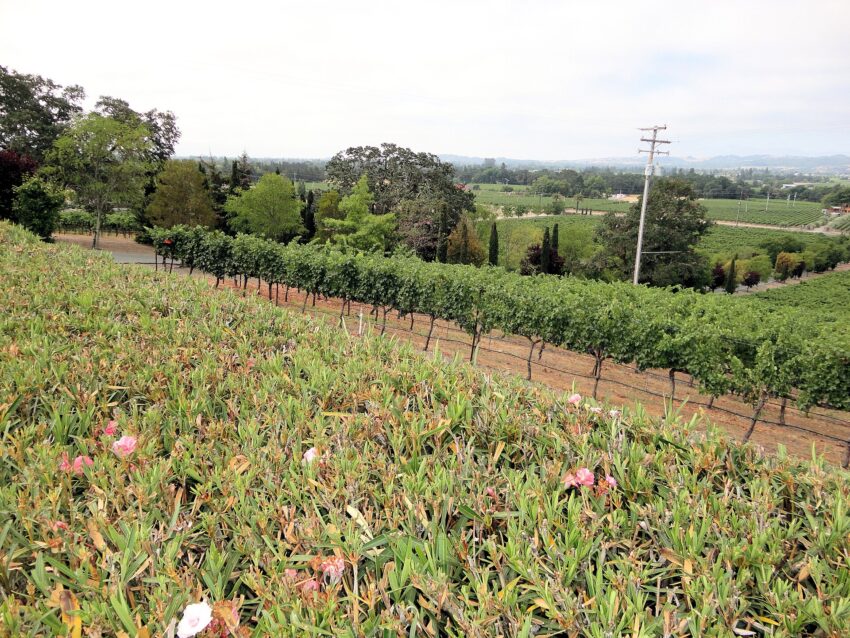
Ray Signorello Sr. bought about 116 acres on the Silverado Trail in 1977, the declaration says. The family made its first wine, a chardonnay, in 1985. The original winery was done in 1988, and the son became the sole owner in 1995. Over the years the family sold 60 acres and kept about 56.
On Oct. 8, 2017, the Atlas Fire destroyed the winery, the hospitality center, a house, the offices and the lab. The vineyards were mostly spared. For about six years, guests came to a temporary building while the winery was rebuilt.
Getting permits in Napa Valley took about three years, Ray Signorello Jr. wrote, and construction ran through the pandemic.
“The final construction cost was approximately twice the original budget,” he wrote.
A dispute with the insurer over the fire ended in what he called an “unfavorable settlement.” Smoke from the 2020 fires ruined most of that year’s grapes, and the winery bottled a single varietal.
The new winery opened in June 2024. By then, demand for wine had dropped. Signorello wrote that it was hard to find other wineries to pay to make their wine in the new building, and sales in Canada fell as tariffs hit American wine.
6 loans, $36.3 million owed
AgCredit made six loans from 2018 to 2024, totaling $29.19 million, the declaration says. By Aug. 27, the lender said it was owed about $36.3 million.
By July 2024, the lender said the winery had broken the loan terms, including missed payments. Two forbearance deals followed, in which the lender agreed to hold off on collecting. The second, signed in October 2025, was meant to give the family a chance to sell the property and repay the loans.
Starting in October 2025, BMO Capital Markets pitched the winery to 119 possible buyers. Fifty-one signed confidentiality agreements, and three sent letters of interest. None topped $15 million for everything the companies owned, and AgCredit told the winery the prices weren’t acceptable.
AgCredit filed two notices of default in Napa County on April 17. It set the foreclosure auction for Aug. 21, then moved it to Aug. 28.
The $16 million offer
On Aug. 24, two buyers, Amar Doman and Ashley Cooper, offered $16 million. That was more than anyone in the BMO search, the declaration says. The next day, AgCredit declined to deal with the buyers or make a counteroffer, according to the filing.
Doman and Cooper then agreed to lend the winery money during a bankruptcy. They said they would offer up to $20 million, made up of $16.5 million in cash plus that loan.
Signorello Estate LP and related companies filed for Chapter 11 bankruptcy on Aug. 27, the day before the auction. AgCredit filed objections to the winery’s first requests to the court, the docket shows.
U.S. Bankruptcy Judge Dennis Montali signed an order dismissing the case on Sept. 11, at the winery’s request, the Register reported. The case closed Sept. 30, and the auction went forward in November.
What happens to the winery now
Vineyards and wineries make up 14.4% of AgCredit’s unpaid loan balances, and the lender’s reports point to weak demand and high wine inventories, the Press Democrat reported. Neither the lender nor Signorello responded to that paper’s requests for comment.
“American AgCredit talks about protecting agricultural legacies. We brought forward a serious cash offer to settle our obligations, with a path to continued family involvement. American Ag Credit chose foreclosure instead,” Signorello told the Chronicle.
“I will pursue every available path to bring this estate back into family hands,” he said.
The lender will need its own state liquor license to keep selling wine there. The winery will likely shut down until AgCredit sells it, the Chronicle reported.