
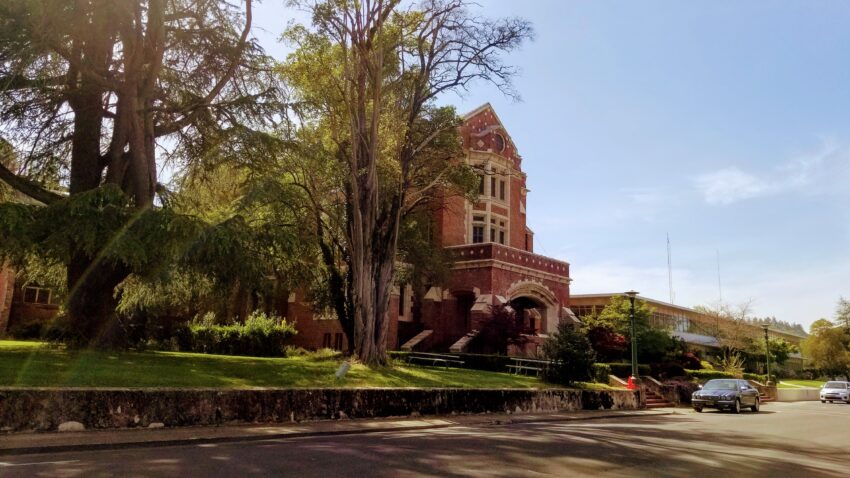
A brush fire flared along Highway 12 this week, north of Glen Ellen, close enough that the smoke drifting down the Sonoma Valley carried a warning the neighborhood knows by heart. Down the valley to the south sits the Sonoma Developmental Center — 945 acres of state-owned campus, all but emptied of the residents it once cared for, its future frozen in court — and fire officials say it’s out of compliance with the fire code, heading into the most dangerous weeks of the year.
The problem isn’t complicated, and that’s what has neighbors so frustrated. The Sonoma County fire code, Ordinance 13A, requires clearing weeds and brush within 100 feet of any building. After months of on-and-off groundskeeping on the property, the Sonoma Valley Fire District says the core campus still isn’t compliant: there’s dry vegetation inside that 100-foot line, and until it’s gone, the state is in violation.
There’s more than tall grass working against the site. The Sonoma Index-Tribune reported this week that hikers on the property’s public trails found standing water pooling in the basement of the campus’s Nelson Building, that a water-main break had left a number of fire hydrants dead, and that thieves had stripped copper and knocked windows out of the vacant buildings. A campus with dead hydrants, in a valley that burns, at the height of fire season, is the kind of sentence that makes a fire chief nervous.
Glen Ellen doesn’t need to imagine what that looks like. In October 2017, the Nuns Fire forced the mandatory evacuation of hundreds of residents and staff from the Developmental Center, burned across the eastern third of the property and took most of its historic farm buildings with it. The main campus was spared, barely. The Ledson Fire that Cal Fire crews were still mopping up this week — 16.5 acres along Highway 12, held at 80% containment — started in the same valley, along the same road.
So why does a state campus sit half-tended in a fire zone while the summer heats up? Because almost everything about the Developmental Center’s future is stuck in a courtroom.
The state closed the facility at the end of 2018 and has spent the years since trying to hand the land to developers. The county wrote a plan. A citizens’ group called Sonoma Community Advocates for a Livable Environment sued, and in October 2024 a Sonoma County Superior Court judge ruled the plan’s environmental study violated California’s environmental law. The Board of Supervisors decertified the environmental impact report and repealed the plan that December. A second group, Sonoma Valley Next 100, then sued the state Department of General Services — the agency that owns and manages the land and buildings — arguing it had broken the 2019 law that set the ground rules for the site. In March, Judge Patrick Broderick let that case proceed toward trial. A replacement environmental study the county promised for early this summer still hasn’t been published.
The plan all that litigation is fighting over is a big one: The state wants to sell the 180-acre core campus to a development team led by Eldridge Renewal, which has floated more than 900 homes and a 150-room hotel. And in a detail that lands a little strangely this month, the state has set aside 52 acres of the property for a proposed Cal Fire regional headquarters — a firefighting hub, on the campus fire officials say is currently in violation of the fire code.
For now, the standoff is the story. The fire district has flagged the violation, but the land and the buildings belong to the state — the Department of General Services — and the fixes are the state’s to make. DGS has declined to comment, citing the pending Next 100 lawsuit. That leaves the people who live around the campus — and the neighbors who still walk its public trails — waiting on a local fire agency and a state department to sort out who clears the brush.
The clock isn’t waiting with them. Fire season in the Sonoma Valley runs hot through October, the same stretch that emptied the Developmental Center once already. Fire officials have said what’s wrong. Now it’s the state’s move — and the brush is still inside the line.